ONLINE online weather, news and information from Mountain Recreation, NZ
contact us [HOME] [top news & weather] [climbing gear] [upcoming expeditions]


TOP NEWS Climbing News
Weather Forecasts
NZ Southern Alps Weather
Current Weather Maps for New Zealand
Today's Weather Map
NZ/NASA Infrared Satellite photo
NZ Met Service IR Satellite Map
DoC Mt. Cook Wx Forecast
Met Service Mt. Aspiring Wx ForecastLong Range Forecast Wx Maps
Aust snow & long range wx charts
MetVU Precip. & wind  forecasts

Currrent Weather Forecasts for New Zealand
New Zealand Mountain Forecast - Met Service
New Zealand Short Forecast - Met Service
(today and tomorrow)
New Zealand Extended Short Forecast - Met Service
(the day after tomorrow and two days after that)
NZ Avalanche Info Exchange

MtnRec Monthly Bulletins Look at our Newletter, Technical Notes
Mountain Essays

New Zealand News
Otago Daily Times
The Press
NZ Herald
XTRA News

ADVENTURE NEWS

EverestNews.com
MountainZone.com
24 hours of Adrenalin
GoldRush
Speights Coast to Coast
Southern Traverse
Rock & Ice Magazine
Climbing Magazine
Chessler Books
Free Climbing

Check out
Ski Resort Cam's
from around the world


TELEPHONE DIRECTORIES


WHITE PAGES
YELLOW PAGES

SPORTS

World Sports
Canada
Australia
United Kingdom
US
World

Rugby
Super 12 Rugby
Planet Rugby
Scrum.com
All-Blacks


Organizations & Clubs
NZ Alpine Club
NZ Mountain Safety
NZ Cragging News
Ngaitahu Iwi (Maori site)


Equipment Companies
Adidas Eyewear
New - Gazelles & Evil Eyes

Salomon Sports
Salomon MountainLites
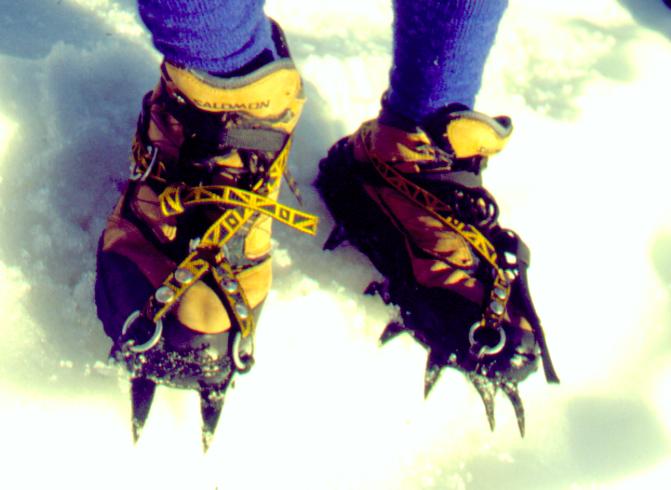
The most versatile alpine boot
!

Boot fitting advice:
Trix, tips & topos
www.foot.com
MacPac
Cactus Climbing
Bibler Tents
AvaLung


Adidas Eyewear Web Link.
Look for "Evil Eyes" & Gazelle

*****UPDATED: 07 January 2009   
Unsettled summer weather links to spate of mtn. accidents

  • GeoffW. was involved in the Cascade Saddle/Dart River search for missing tramper Irina Yun (36) who went missing on 31/12/08. On 05/01/09 a search team found her pack in a gorge 300mtrs. below Dart hut.


    The search involved over 300 man/hrs. of volunteer time. checking through basins, bluffs, streams and slabs of the Matuki/Dart sections of the challenging Cascade Saddle route. Ms. Yun, an outdoor enthusiast, but inexperienced and solo tramper is presumed drowned in the Dart River.

    At the time of Yun's disappearance, the Dart river was flowing at 700cu/m. ten times it's normal 80cu/m


Cascade basin, Mt. Tindall (left) Ansted (right)


Steep spur climb to pylon/ridgline. Left gully of face has been scene of 2 recent fatal slips in snow/snowgrass.

Aspiring Fatal Fall

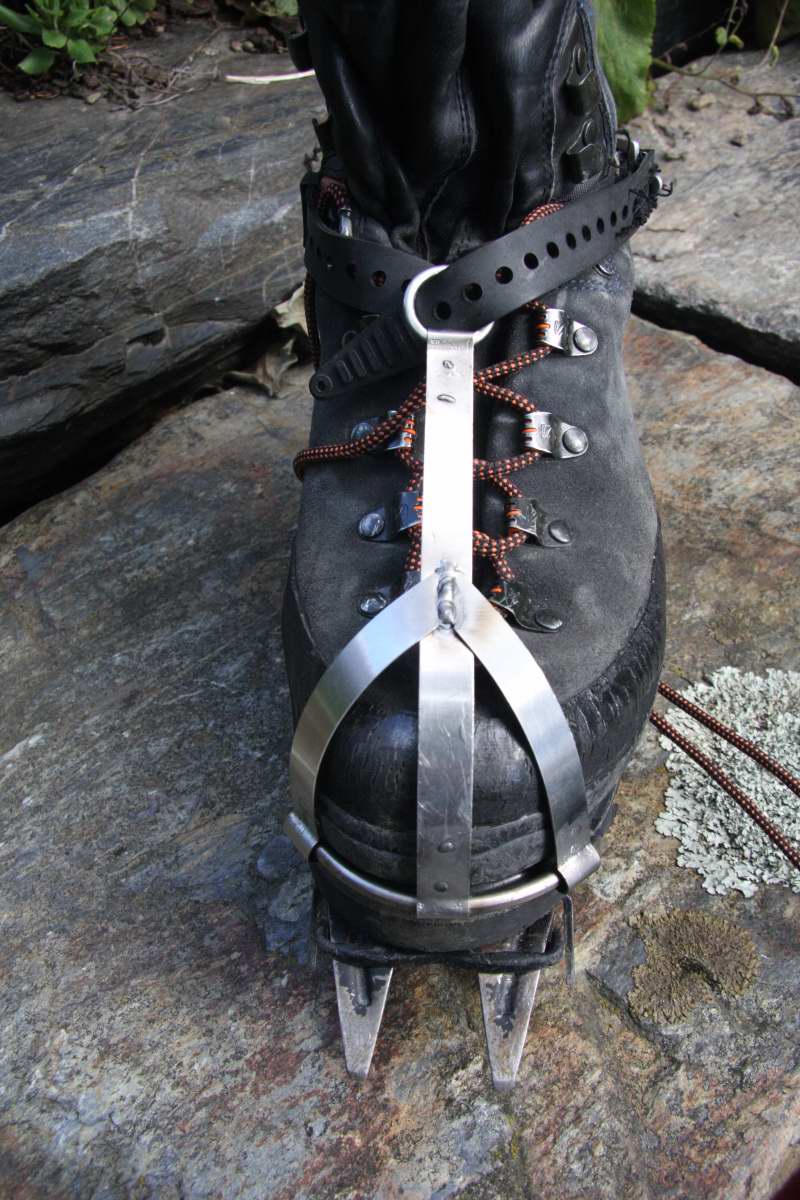
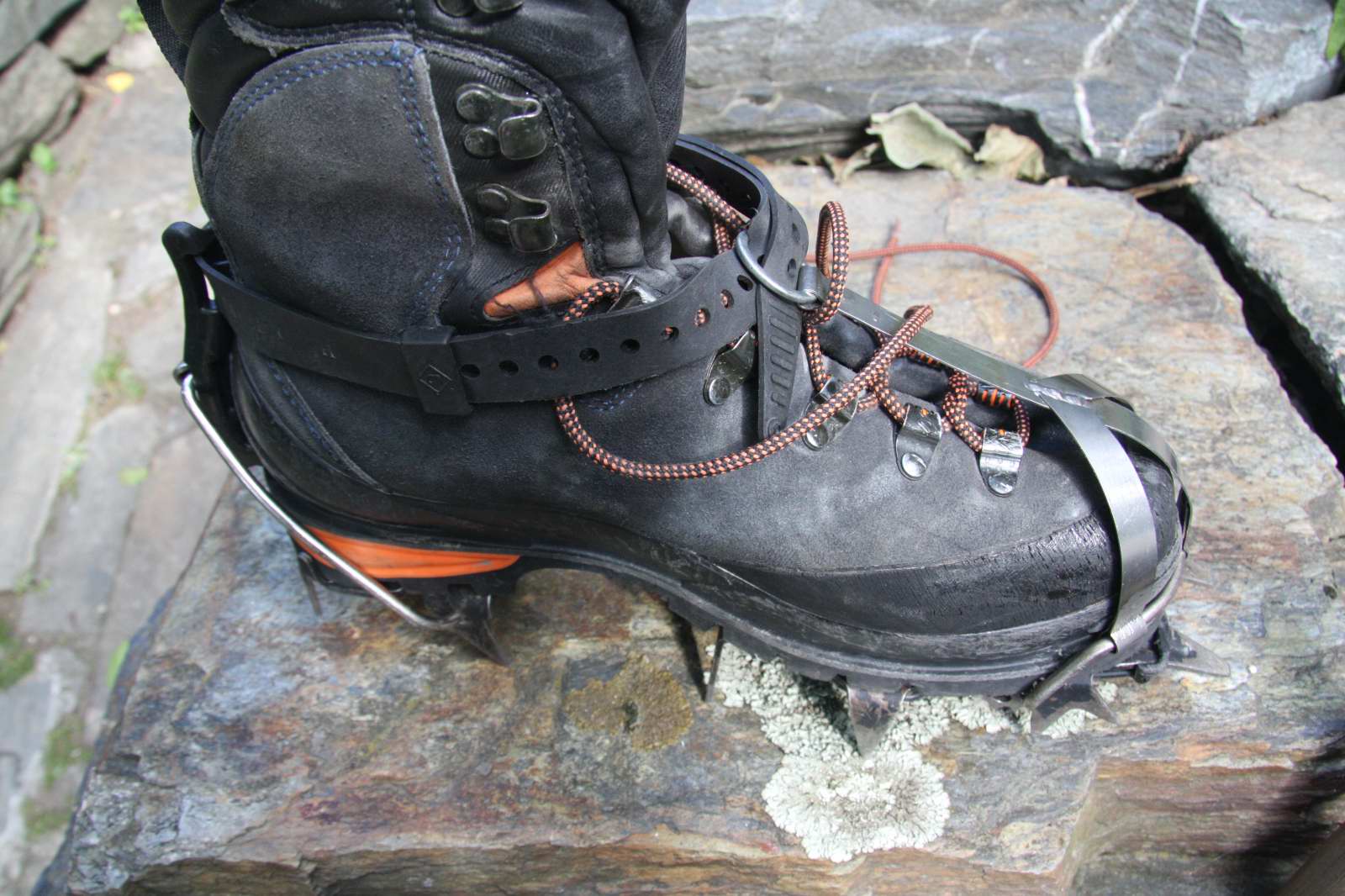
  • Former Kathmandu retail chain owner and Wanaka resident, John Pawson died in fall while soloing Aspiring's SW ridge with a friend on 27 Nov. 2008. Conditions at the time were good. Cause unknown, but earlier in the day, John was reported to been having problems with his crampon/boot fit. The Salewa crampons had no toe-bail safety strap to connect to the ankle strap.

    Aoraki Epic and tragedy

    In early Dec. 08 two Japanese climbers attempted the Grand Traverse and got stuck on the middle peak (3700m)for 5 days. One, mtn. guide Ikenouchi (49)died hours before clearing wx allowed for a dawn  rescue to take place. It was apparent the climbers were slow on the climb and could not get sufficent shelter for their tent and selves to survive. There was also apparent confusion with media helicopters and a drop bag of supplies was not utilised by the trapped climbers.         (a reason to install locator beepers?)

    Hideaki Nara (51) getting aboard rescue heilcopter. The unused drop packs alongside him.


  • GW - Ski Guide to former PM!!!                     (for 2 runs in July08 at Cardrona Lift Opening)


  • Ed Hillary dies at the grand age of 88.
     

  • Geoff Wayatt completes 81st ascent of Mt. Aspiring w/scholarship student and 82nd w/local Otago family - see summer 07/08 article & images.

  • Bolts placed on Aspiring's Buttress show incompetence and lack of courtesy in Guiding community.

  • Army Alpine Assoc. members complete successful training week in Franz/Fox glaciers.

  • Prominent Mtn Guide suffers fatal fall on Aoraki in Jan.

  • Veteran guide suffers fatal aortic aneurysm in Two Thumbs Range, Tekapo in August 08.

  • Summer meltdown continues on glaciers. NIWA reports glacial volume loss.


  • Link to Super Mountain Lites & Access boots

  • Main Divide to the Sea - Our "HOT" new expedition
    including latest photos of our 4 day Fox Glacier Exp.

  • 4 day Mt. French Trek/Climb w/ Mt Aspiring view. Details: Mt Aspiring Treks
    Photos:
    Mt. French Expedition. New!
    Tips, Trix, Topos: Boots, Footcare and Blisters

Other Useful Weather Sites
Global Satellite Photos (from NASA)
Victoria University (Wellington, NZ) Meteorological Site
University of Canterbury (NZ) Geography Department
National (NZ) Institute of Water & Atmospheric Research (NIWA)

Aspiring – 3028m
The North-West Ridge – Buttress Route   Geoff Wayatt 24/01/08

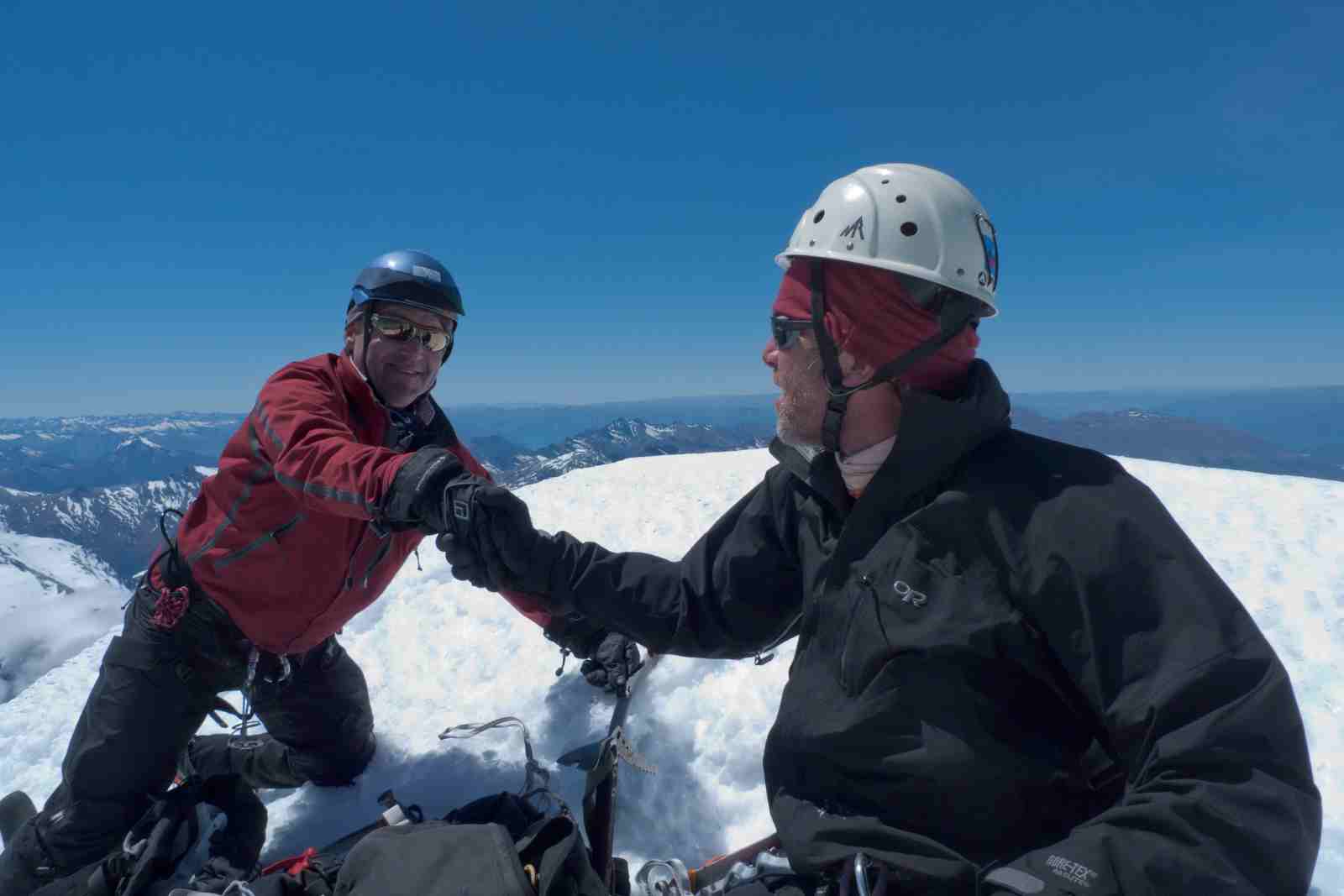
“Unbelievable” said Liz as she looked down the South Face and realised she had finally made it to the summit of Aspiring. The sharp wind kept our senses keen and the summit icecap glassy and firm.  It was 8.30am. on the 20th January 2008 and both of us were thankful we hadn’t attempted the South Face on her very first climb.

Liz Millar, a 23 year old Australian Engineering student had fulfilled an 18 month dream after winning a scholarship for an instructional climb of Aspiring. It was her very first mountain climb and my 81st ascent to view one of the finest 360 degree alpine panoramas of the Southern Alps. 

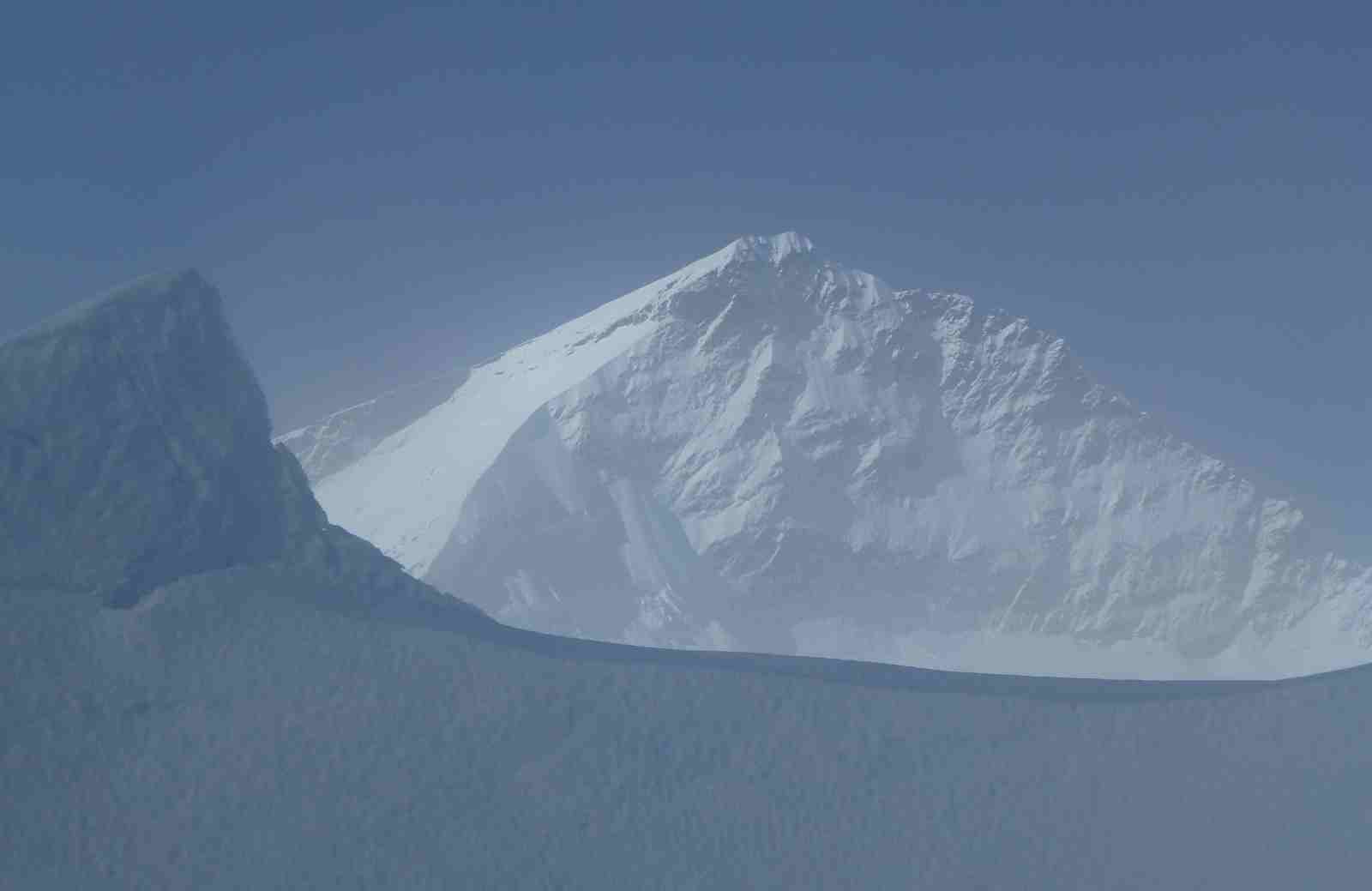
“Where’s the South West ridge?”  her eyes searched along the Coxcomb ridge then following my finger around the South face cornice to the sharp ice arête plunging southwards. “That’s where the classic sustained, knife-edged ice climb ends,” I explained, pointing into the abyss below. “But I’ll show you as we descend. For now, let’s focus on our climb and descent.” There’s a large retrospective contemplation to climbing and this was no exception. We had to crampon down the icecap with no errors. 

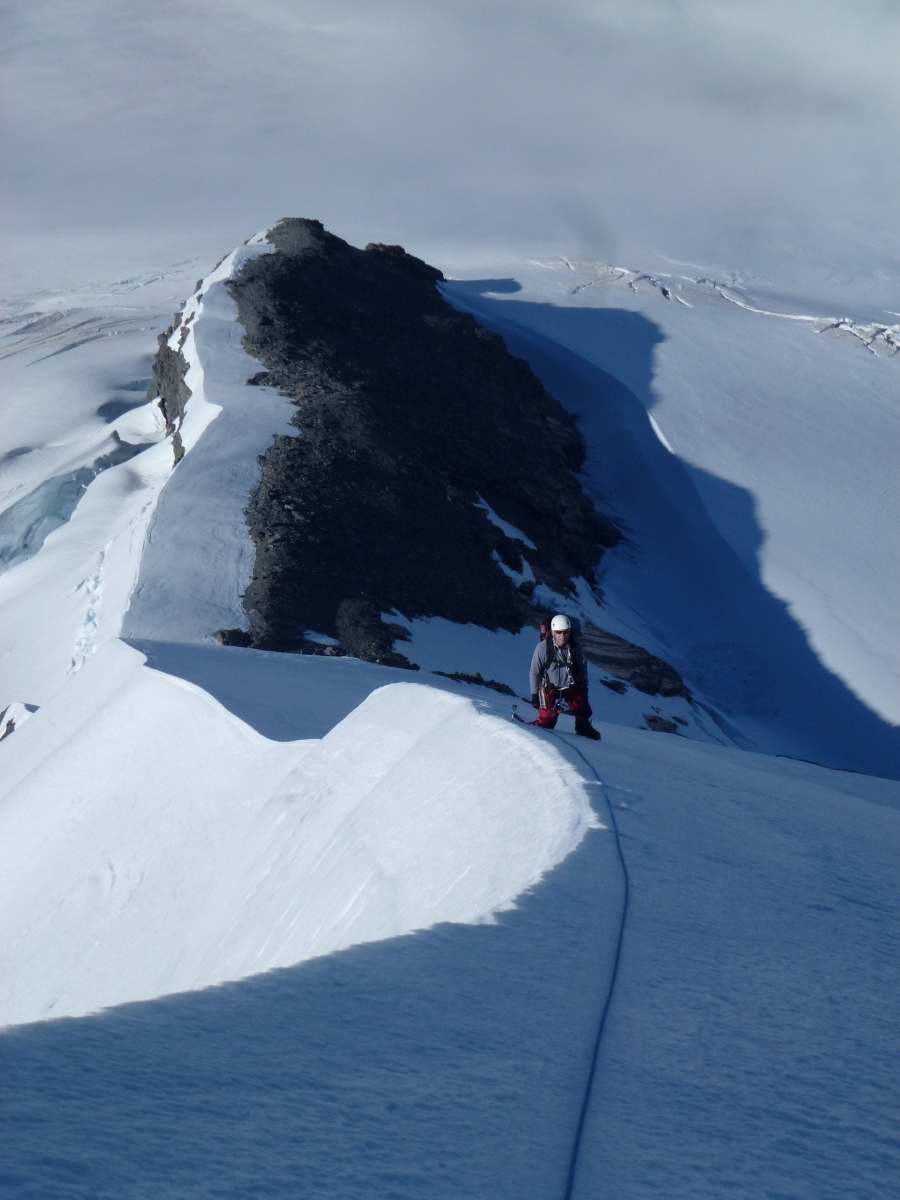
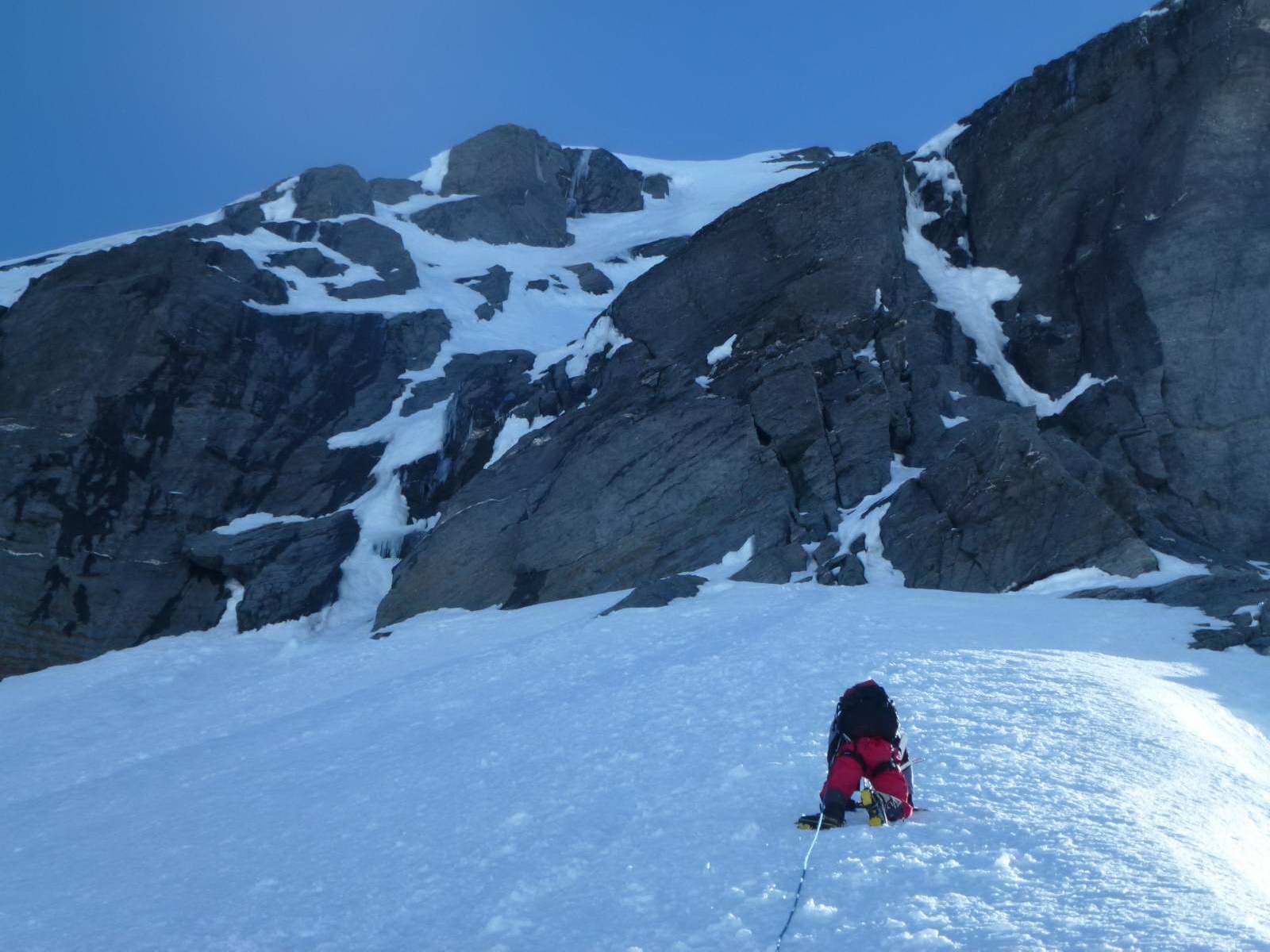
I’d chosen to climb the NW Buttress route, which was a lovely airy scramble for a strong and fit novice. It wasn’t necessarily my favourite, but it was my most often climbed route and certainly the favoured for my novice clients.

We bivouaced under the Buttress on the Bonar glacier at 2100m, thereby avoiding the loose and more exposed rock traverse from the Ship-owner ridge. An afternoon recce up the lower Buttress had shown we were in dry, late summer conditions and Liz was competent on her feet. Of recent years, I have preferred use the Buttress route with novice clients in the stable conditions of mid to late summer.

Note: Bolt placed within 2mts. of natural crack & horn.
The climb is also easily protected for novices with 2 cam, 3 nuts, 2 pitons and a few slings for throwing over natural protection.  However, recently a Mtn. Guide drilled series of bolt anchors which appears to be a gross violation of an easy to protect climb for the convenience of a few people of questionable competence and ethics. (see: Bolting on Aspiring)   

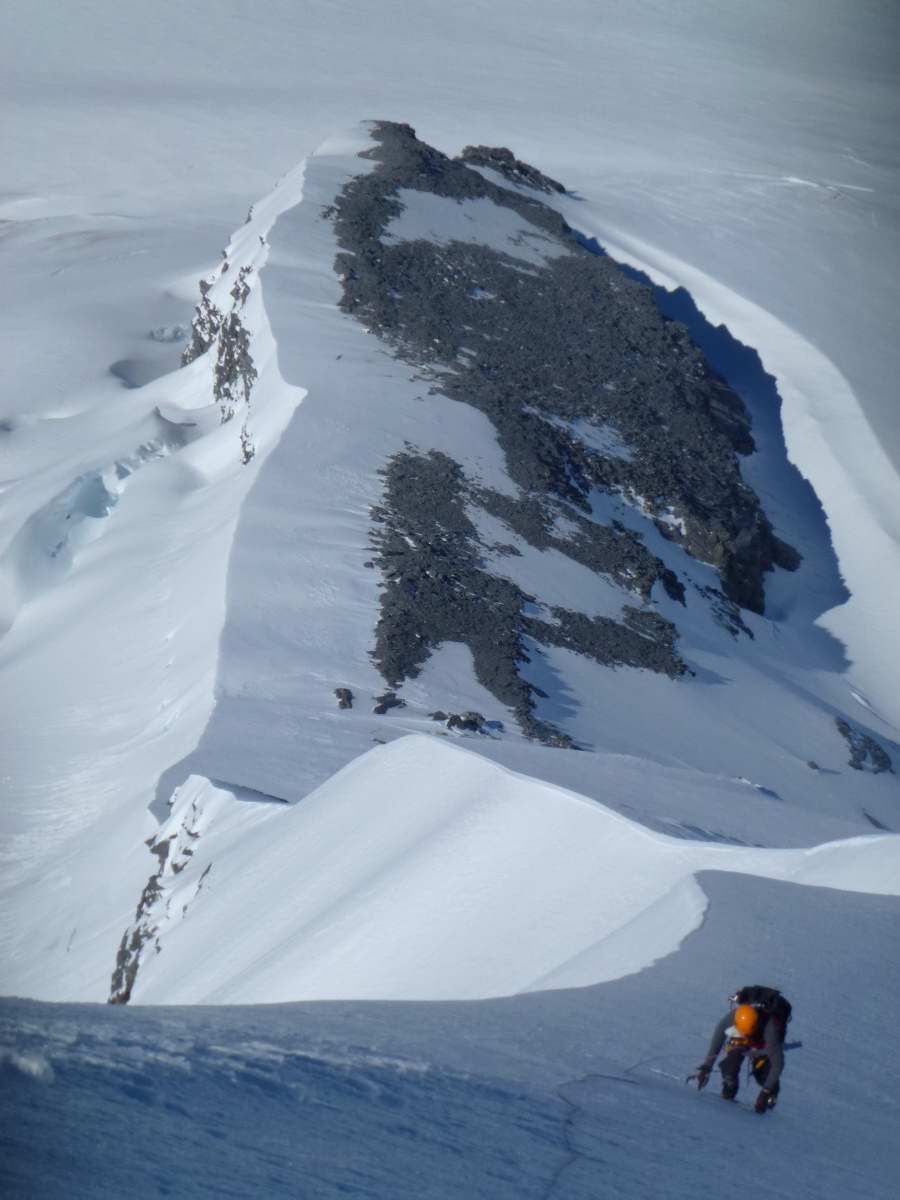
Following the ridgeline of the buttress as it’s easier for me to protect my client. The blaze of sunrise on the Haast Range and Aspiring’s shadow are a bonus. Some may opt to traverse through the ledges of the Therma face. In misty conditions route-finding on the return can adventurous. Crampon marks, a few cairns and kicked trail appear sufficient for new comers to the route.
Our times on this ascent show that there is ample for placement of protection and route-finding:
0445 hrs: Pre-dawn brew under a starry sky with lights of Colin Todd hut signalling others would join us on the mountain.
0530hrs: Left bivi at 2100m to traverse out to exposed start of the Buttress/ridge.
0700hrs: Reached the broad snow Shoulder where the Ramp joins the main ridge.
0830hrs: On summit for 10minutes of breathtaking views from Tutoko to Aoraki.
10.00hrs: Brunch-time back at the Buttress route to refuel, re-equip and cloth for the  descent.
1135hrs: Arrival at bivi for welcome brew and change to from climbing to glacier-mode to descent to Bevan Col.
1435hrs: Descended off Bevan Col to snowgrass terrace below Hector Col (this can be tricky in an early season white-out. (See Geoff’s sketches in Aspiring region guidebook.)
1830hrs: Bivi in snowgrass under the Joffre cliffs at the head of the West Matukituki Valley.

Geoff’s Buttress Footwear Tip: Grippy jogging shoes go well on the rock for those not used to plastic boots or preferably Salomon Pro-Trek7 boots (or equiv) can handle the whole mixed rock/ice climb including valley walk in/walk out.
 

Glacier shrinkage reported: Most of New Zealand's glaciers are now the smallest they have been since records began - and they continue to shrink at a rapid rate.

The National Institute of Water and Atmospheric Research, which made the discovery, said global warming was the main culprit.

Between April last year and March this year, glaciers in the Southern Alps lost about 2.2 billion tonnes of permanent ice - the equivalent in weight to the top section of Mt Taranaki. It is the fourth highest annual loss since monitoring began 32 years ago.

The total ice for the glaciers now comprises an estimated 44.9 cubic kilometres - the lowest on record. The volume of ice dropped by 50 per cent during the last century.

Niwa principal scientist Jim Salinger said glaciers were fed by snow, but because of the La Nina weather system over New Zealand, more easterly winds and warmer than normal temperatures during the period, there was less snow in the Southern Alps and more snowmelt.

Dr Salinger said while the glaciers were sensitive to changes in wind and precipitation as well as temperature, global warming was a big factor in their shrinking.

"It's one of the clearest signs that our climate is warming and that [the shrinkage] is a definite physical response. To have that amount of melting you would have to reduce the precipitation at least by a half or more or warm a degree," he said.

"We know that precipitation has not gone down in the Southern Alps. In the last quarter of a century it's gone up. So to make them retreat you've got to have more melting, which is higher temperatures.

"This is certainly a definite sign of warming in the New Zealand area."

Niwa has surveyed 50 glaciers in the Southern Alps for the past 32 years, recording the height of the snowline at the end of each summer. On average the snowline this year was 130 metres above where it would need to be for the glaciers not to shrink, Dr Salinger said.

It was unlikely the glaciers would disappear entirely, as that would require a temperature rise of 7 degrees celsius and no snow even at the top of our highest mountain, Mt Cook.

But they would continue to retreat. Another sign of warming were 12 glacial lakes, including ones at Marion Glacier and Tasman Glacier.

"They are definitely a sign of warming. There is no doubt about it. You get a very rapid loss of snow and ice and that's what's been happening."


Keep Fit (and dry), Geoff Wayatt


  [HOME] [top news & weather] [climbing gear] [upcoming expeditions]
   
  (home) (upcoming expeditions) (about mountain rec) (geoff wayatt profile) (mt aspiring guided treks) (climbing courses)
(mnt rec's avalanche lodge) (geoff's mountain photo's) (mail order equipment sales) (tips, trix, and topos)
(
previous expeditions) (technical mtn. notes) (weather & avalanche notes) (registration form) (contact us)
(
latest news and weather)